Send an Enquiry
Coconut
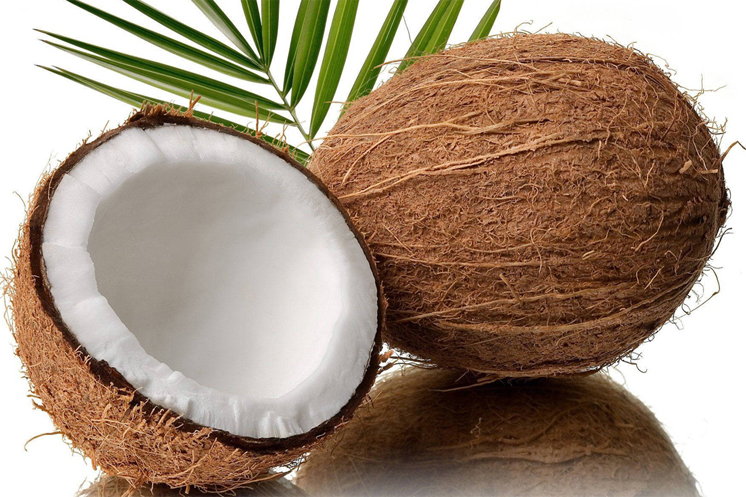
The coconut (Cocos nucifera) is a remarkable tropical fruit that belongs to the palm family, Arecaceae. It is often referred to as the “tree of life” because nearly every part of the plant is useful for humans. The coconut palm thrives in coastal regions of tropical and subtropical countries, especially in Southeast Asia, the Pacific Islands, and parts of South America and Africa. Botanically, the coconut is a drupe rather than a true nut. It has three distinct layers: the outer fibrous husk (exocarp and mesocarp), the hard woody shell (endocarp), and the inner edible part (endosperm), which includes the white flesh or “meat” and the liquid “water.” Coconut water is rich in electrolytes such as potassium, magnesium, and calcium, making it a natural hydrating drink. The flesh contains healthy medium-chain fatty acids, particularly lauric acid, known for its antimicrobial and energy-boosting properties.
Beyond its nutritional value, the coconut has immense economic importance: its oil is used in cooking, cosmetics, and biofuel production; its husk fibers (coir) are used to make ropes, mats, and brushes; and its shell can be carved into handicrafts or used as charcoal. Culturally, the coconut holds spiritual and symbolic significance in many traditions, representing purity, fertility, and prosperity. Environmentally, coconut palms help stabilize sandy soils and support coastal ecosystems, making them not just a vital food source but also a key player in tropical biodiversity.