Send an Enquiry
Cashew
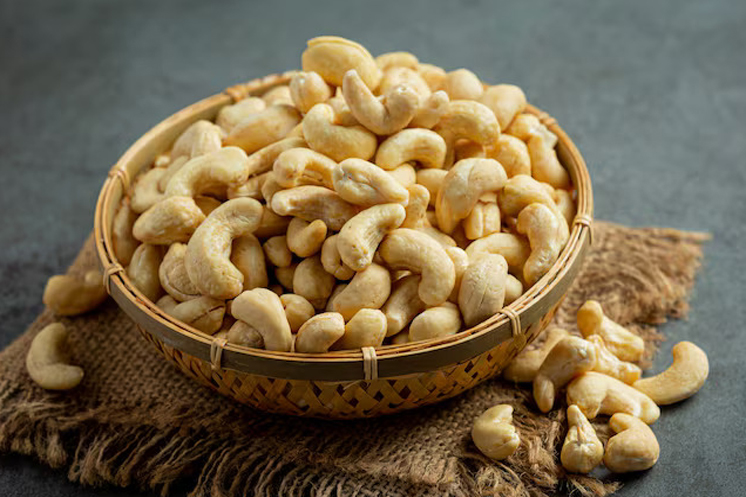
The cashew (Anacardium occidentale) is a tropical evergreen tree native to northeastern Brazil and now cultivated widely across India, Vietnam, Africa, and other warm regions. It produces two distinct edible parts: the cashew nut (a seed) and the cashew apple (a swollen stem or accessory fruit). The cashew nut grows externally at the bottom of the cashew apple, enclosed in a hard shell containing a toxic, caustic oil called anacardic acid, which must be carefully removed through roasting or steaming before consumption. Cashew kernels are prized for their rich, buttery flavor and high nutritional value—they contain healthy monounsaturated fats, protein, magnesium, zinc, iron, and essential vitamins such as B-complex and vitamin K. The cashew apple, although highly perishable, is rich in vitamin C and is used locally to make juices, jams, and alcoholic beverages like feni in Goa, India.
Cashews contribute significantly to the global economy, especially in tropical regions, providing income for millions of small farmers and processors. Beyond food, cashew nut shell liquid (CNSL) is an industrially valuable byproduct used in making resins, paints, lubricants, and brake linings due to its phenolic compounds. In traditional medicine, cashew parts—leaves, bark, and shells—have been used for their antimicrobial, anti-inflammatory, and wound-healing properties. Culturally, cashews hold importance in festive cuisines and as a luxury ingredient in sweets and savory dishes. Environmentally, cashew trees help prevent soil erosion and thrive in dry, sandy soils, making them a resilient crop for tropical and subtropical ecosystems.